Categories
Travel

Egypt: Luxor Temple

The entrance to the Luxor Temple feels much more complete than that of Karnak. There is the usual Pylon of stone on either side but with an obelisk added and two seated pharaohs guarding the entrance with two more standing pharaohs on each side. Luxor has so much more ‘stuff’ than Karnak. The reason for the difference is easy to explain.

Karnak is a shrine to the gods – Amun, Mut, and Khonsu specifically with a plethora of shrines to other gods added over the centuries. Whereas the Luxor Temple is specifically a temple to the Pharaohs and the yearly rejuvenation of their rule. So, it seems to me that the pharaohs went out of their way to make sure everyone knew what big powerful kings they were.

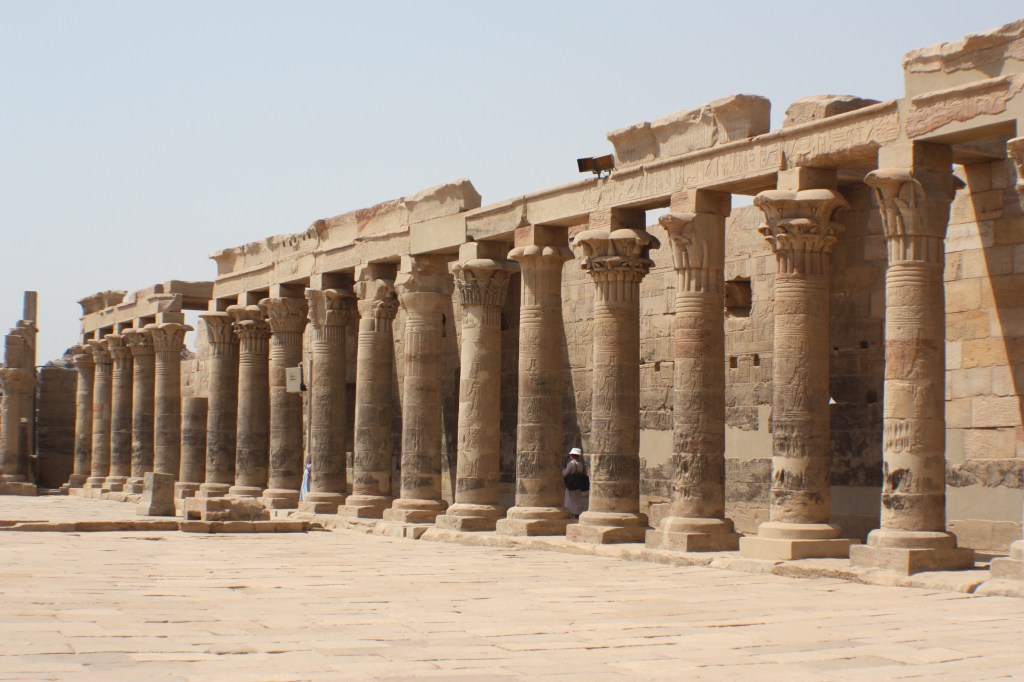
Ramses II in particular left his mark on the temple. He added the grand pylons at the entrance. The statues guarding the entrance, two seated and four standing, are stylized depictions of him. Ramses II also added the first courtyard with seventy-four Lotus bud columns and even more statues of himself. As I said, this is a temple to the Pharaohs by the Pharaohs – look how great we are!

At one time a grand scene of Ramses II going into battle decorated the Pylons. You can just make out the remnants of the carvings that were originally painted in bold bright colors. Also, there were originally two obelisks set at the entrance, but the smaller of the two was gifted to France in 1829 and is now in the Place de la Concorde in the center of Paris. We drove past it on our stop-over in Paris.

The city of Luxor was built on the ruins of Thebes, the ancient capital of Egypt. The power of the pharaohs was centered around the worship of the Gods at Karnak and rejuvenated every year at Luxor during the flooding of the Nile with the Festival of Opet. They were then buried in the Valley of the Kings across the river on the west side of the Nile. Thebes was the site of more than sixty festivals and feasts annually. It was the center of both religious and political power for centuries.

Alexander the Great recognized this and had a shrine built here after he conquered the country. He had his image stylized as a pharaoh and carved into the walls depicting him receiving his power from Amun. This is the Amun-Min version of the god with one arm, one leg, and a massive penis! On our visit, there was a line of people to see this carving. Apparently, massive penises are very popular with tourists!

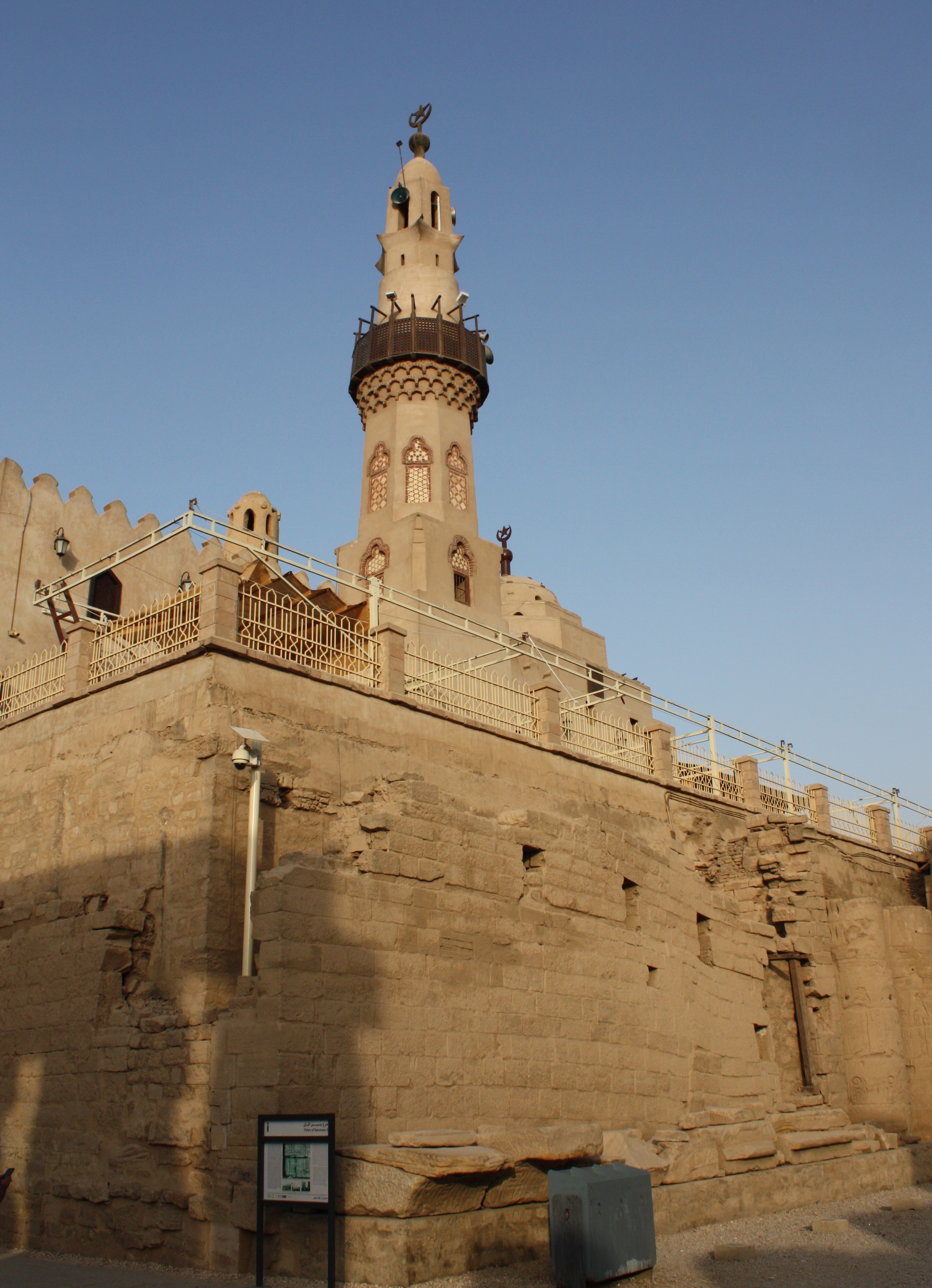
The Luxor temple complex has been an important religious site for more than 3000 years. The original temple was dedicated to Amun, the God of the Air. Romans used it as a church and monastery that was then converted into a Mosque that is still in use to this day.
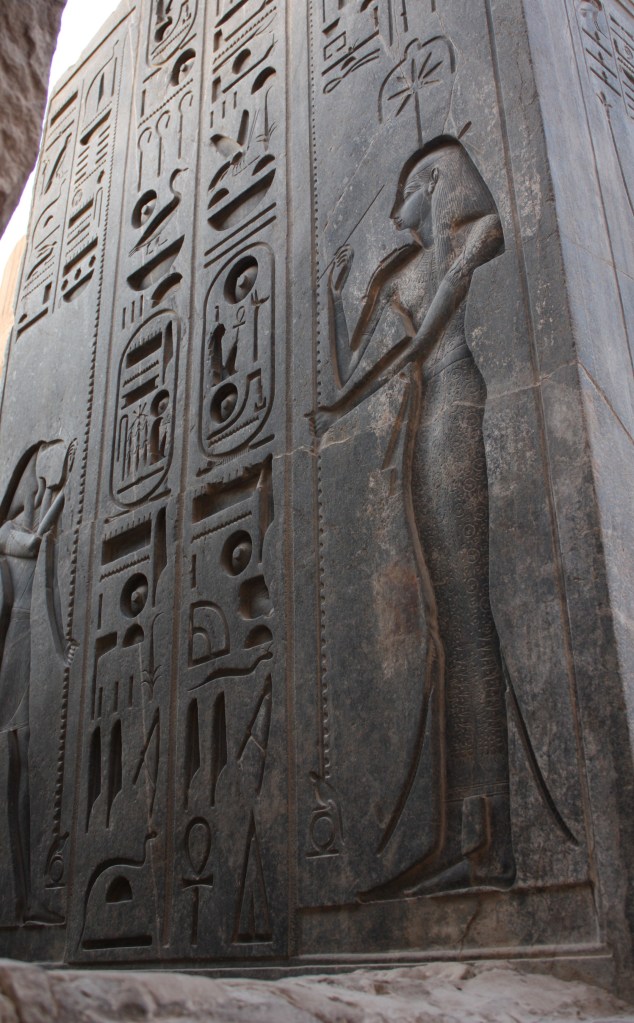
Our personal guide Ahmed knew that I was an engineer and writer. At Karnak, he pointed out the temple of Ptah – the god of architects and engineers. At Luxor, he showed us an image of the goddess of writing and knowledge – Seshat. (My new favorite goddess.) The image is carved into the back of the throne of one of the seated Ramses II statues inside the temple. You would never notice it unless someone pointed it out.

The central aisle through the galleries will take you to the most important room in the temple: the room where the god’s barq was kept. They have a replica displayed inside, but again there was a line to peek in and no lighting, so it was impossible to get a good picture of it.

All the professional guides in Egypt are required to be Egyptologists. Seriously, they are experts at the stuff. Our guide, Ahmed, had a PhD in Egyptology. When we visited the temples, he flooded us with information. The history of the sites and the narrative of the stories carved into the stone is so vast that it would take a PhD to absorb it all. We did our best to retain and understand as much as we could, but it did not take long before it was a blur of names and symbols. This was when I stepped away and began just looking for great photos.

Ancient temples and the world’s tourists surrounded us. I was literally eating up the culture and the atmosphere. I loved it. I took hundreds of pictures here and got my first taste of the monumental architecture of Egypt.

As an avid photographer, I love looking for the perfect picture of a scene. I tend to see what I want in my mind’s eye and then attempt to recreate it. Egyptian temples are a treasure trove of photo ops. I love a good space and the massive stone construction provided some great shapes and shadows to work with.

In the back corners of the temples, you will run into locals that have staked out prime locations and will point out extra special photo ops for a few dollars. I am sure they make a pretty good living during the tourist season.

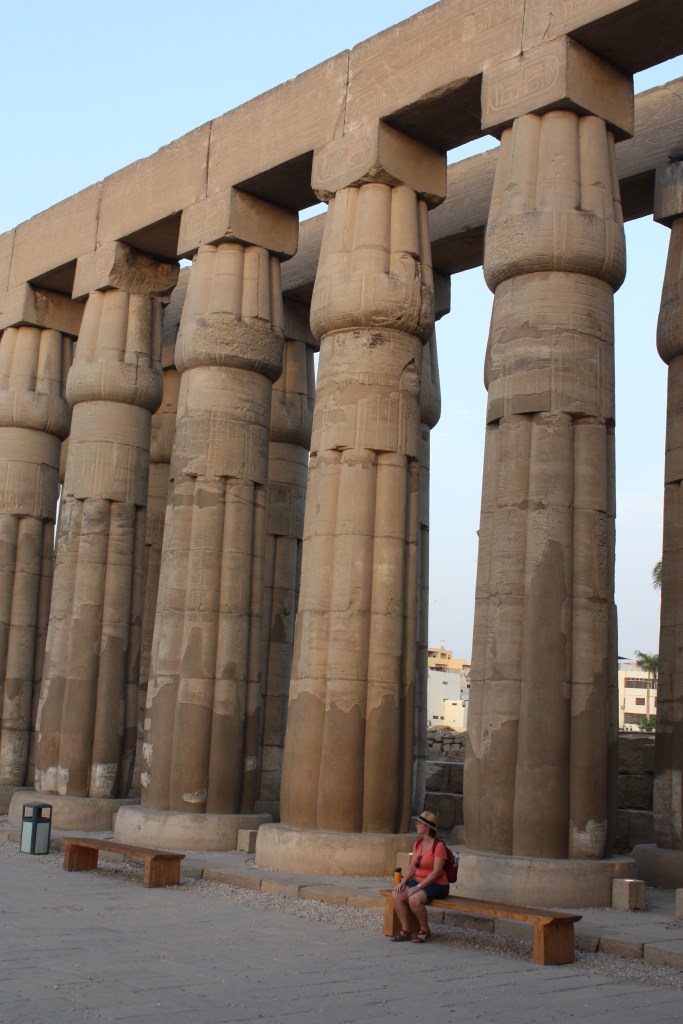
When I travel, I like to step away from the group to explore and absorb the atmosphere of a place. I did that here. I avoided touching any carvings, but not everyone is so careful. However, I did place my hand on the rock of the temple and even hugged one of the massive columns. I always hope to feel something – such as an energy reaching down 3500 years to somehow connect with me. There was nothing there to feel, but it was still thrilling to be able to place my hand in the same place another person had touched hundreds of generations ago.

That is how travel can really put your life into perspective. Compared to the age of this place, my life is a grain of sand. How could my daily stresses mean anything in comparison?  

Gute Reise!

Categories
Travel

Our Egyptian Adventure: The Nile

The Nile is such an iconic river it would be difficult to live up to its vaunted reputation. For me, it has been the subject of decades of history lessons, bible lessons, favorite movies, and books. So, of course, it didn’t live up to its image.

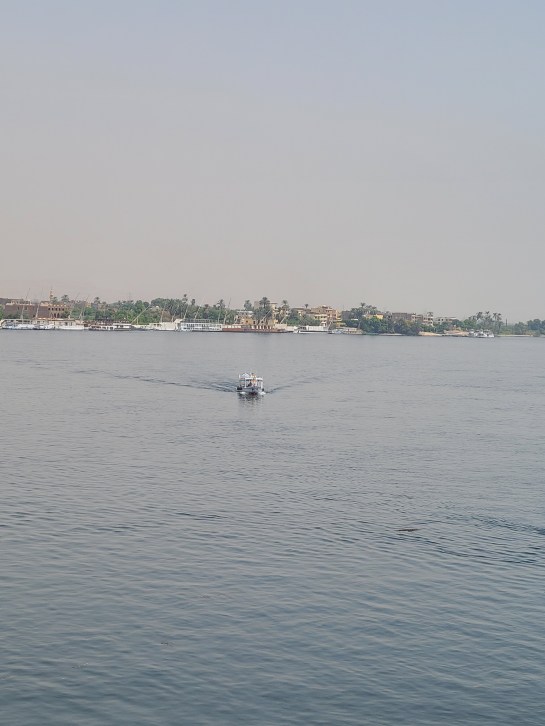
The Nile is much narrower and calmer than I ever expected. It is a wonderful small river; clean enough for swimming and fishing. Unlike American and European rivers, the Nile is not very industrialized. In our four days on the river, I never saw a barge or a factory. There was a small amount of trash along the shore, but it was minimal compared to what I’m used to.

I expected it to be much wider. It’s narrow and clean.

I live in St Louis, Missouri, USA, right on the Mississippi, which is an industrialized and sick river. I would never swim or fish from it. Which, made the Nile such a surprise. There has been a civilization along the Nile for thousands of years and you would expect that to show in the river itself, but it doesn’t. It’s as if the river washed all those years away, leaving the land clean and natural again.

The land along the river is extensively farmed but by small family plots. We didn’t see any industrial farming as we see in the US. There was no large farm equipment at all; people still used donkey carts and manual labor to work their fields, just as their ancestors did.

The country is extremely poor and much of the population barely gets by. Many of the homes we could see along the shore were simple and crude. However, everyone smiled and waved. They genuinely wanted us there because tourism is really the only economy in Egypt.

When we scheduled our Nile cruise, we imagined a lone boat making its way along an isolated desert shore. But the ships work the same itinerary, so they cruise as a pack, parking side by side at the dock and allowing passengers to pass through to the shore. It was surprising, but I can see the logic.

The Nile is smooth and navigable, making the trip perfect for anyone that gets seasick. There was almost no movement of the deck.

We were on shore touring the sites in the morning and early afternoon. The boats leave the dock in the afternoon and usually cruise through the night. The observation deck was ideal to watch the procession and the night shores glide by. The air smells different in Egypt, clean and fresh compared to home, with a little hint of sand.

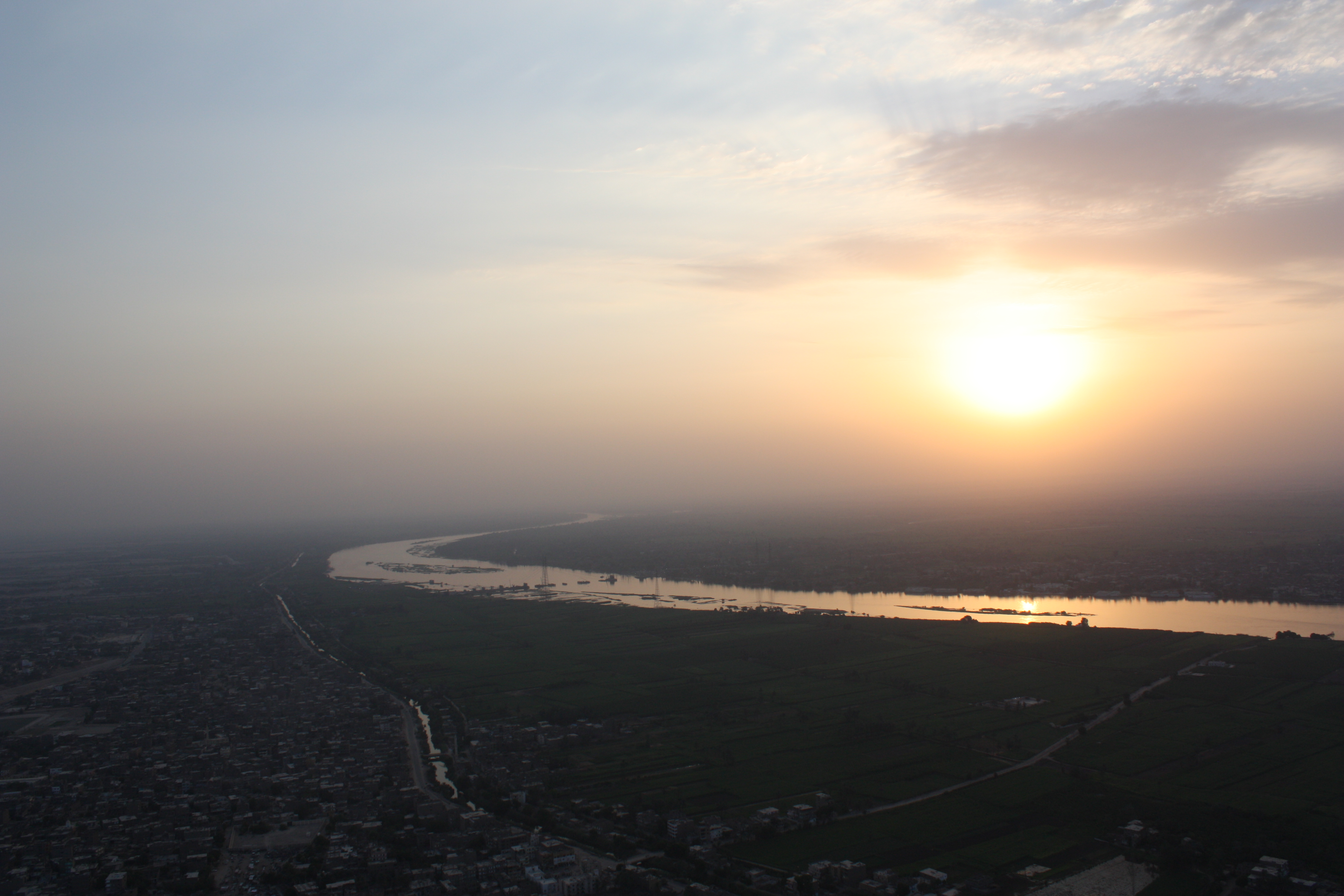
The Hollywood image of the Nile is far from its reality. It is a beautiful river flowing between lush green shores bordered by bare rocky hills behind. The valley of the Nile narrows in places to only a narrow shore before the desert pushes in. Most of the Nile valley is wide and green, extending for miles into the desert, proving that the Nile is still the lifeblood of Egypt and will lead you to adventure.

Categories
Travel Uncategorized

Egypt – Finally

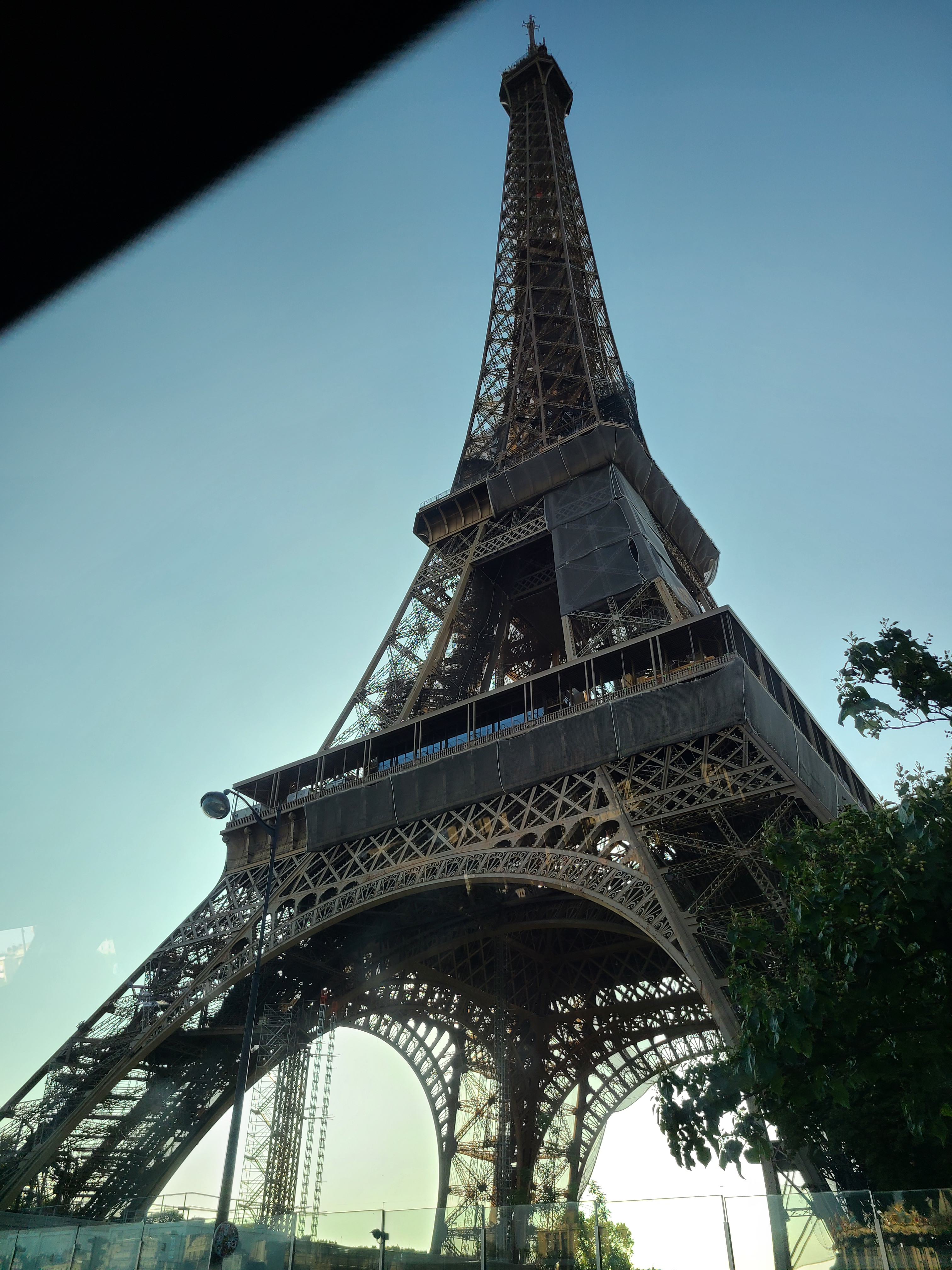
In our travels, my wife and I avoid tourist traps. We like foreigners and travel to meet them on their home turf, not to hang with other tourists. We seek to experience foreign parts with the locals. However, our vacation to Paris and Egypt was absolutely focused on tourist traps: the Eifel Tower, the Louvre, Notre Dame, Luxor temples, Valley of the Kings, Giza Pyramids, and the Egyptian Museum. There was no avoiding tourists.

Yet, we were helped by the fact that our visit was at the end of summer before the busy season, so most sites were at less than medium capacity allowing us to enjoy them in relative peace. We also had a private tour guide for most of the trip. We shared a guide with another couple for our cruise down the Nile, which included the Luxor temples, Edfu (my favorite), the Valley of the Kings, and the Temple of Isis at Aswan.

Ready for Adventure

Our days began at 7 or 8am to avoid the heat and crowds, allowing us to really experience the temples intimately without the crowds.

As the day progressed we had to contend with larger and larger groups of tourists. Busloads of people would be following a single guide around the temples. It turned into a cacophony of different languages. I can’t imagine they received much information from their guide. It didn’t look like a good time. We were usually done and back on the boat by early afternoon.

Our guides from Memphis Tours (https://www.memphistours.com) did a knock-up job, they were more than knowledgeable; actual Egyptologists. Not some random guy with a notebook.

The heat of Egypt was brutal and this Minnesota boy did some serious melting. My best suggestion to survive Egypt is to purchase a good quality Egyptian cotton scarf (not the $10 scarves sold by random vendors) and learn to make a turban. Once I was properly equipped, the trip was much more enjoyable. I sport a bald head and my dome was thoroughly baked after the first day. The turban was a life-saver.

We found the Egyptian people to be super friendly and helpful – for a tip. Tourism is really the only economy in Egypt and much of the local market is driven by tips. Don’t be stingy, but don’t be taken too easily. There is a fine line between being generous and being a sucker. I was caught as a sucker a few times, I know.

This trip was in the planning stages for almost four years; meant to be  Sheri’s fiftieth birthday trip. She wanted to scuba dive in the Red Sea. I learned to swim and then got my scuba certification for this adventure. We were set to go in the fall of 2020, but then disaster, pandemic, and general idiocy ensued ruining our plans.

As the date of our trip approached – again – I kept expecting something to happen; another outbreak of stupid, or an asteroid, or pilot strike… something. But nothing happened and we finally found ourselves on a plane to Paris and then Cairo! Crazy!

Three years of anticipation were finally coming to fruition and man was it worth it. I have 3000 pictures to sort through and memories to last a lifetime. Which is exactly why we travel.

The world is a really big place and we can never truly understand that if we never explore it. I love home and my boring middle-class American life, but I can never truly appreciate it until I experience other places. Only then can I recognize how fortunate I am to live where I do and how completely spoiled we are here. Never take where or how you live for granted, we are all only a stroke of luck away from living in a hovel or sleeping on the ground.

Enjoy life and see the world!!

More to come…